BRICS Summit Concludes in New Delhi with Focus on Global Cooperation
September 14, 2026
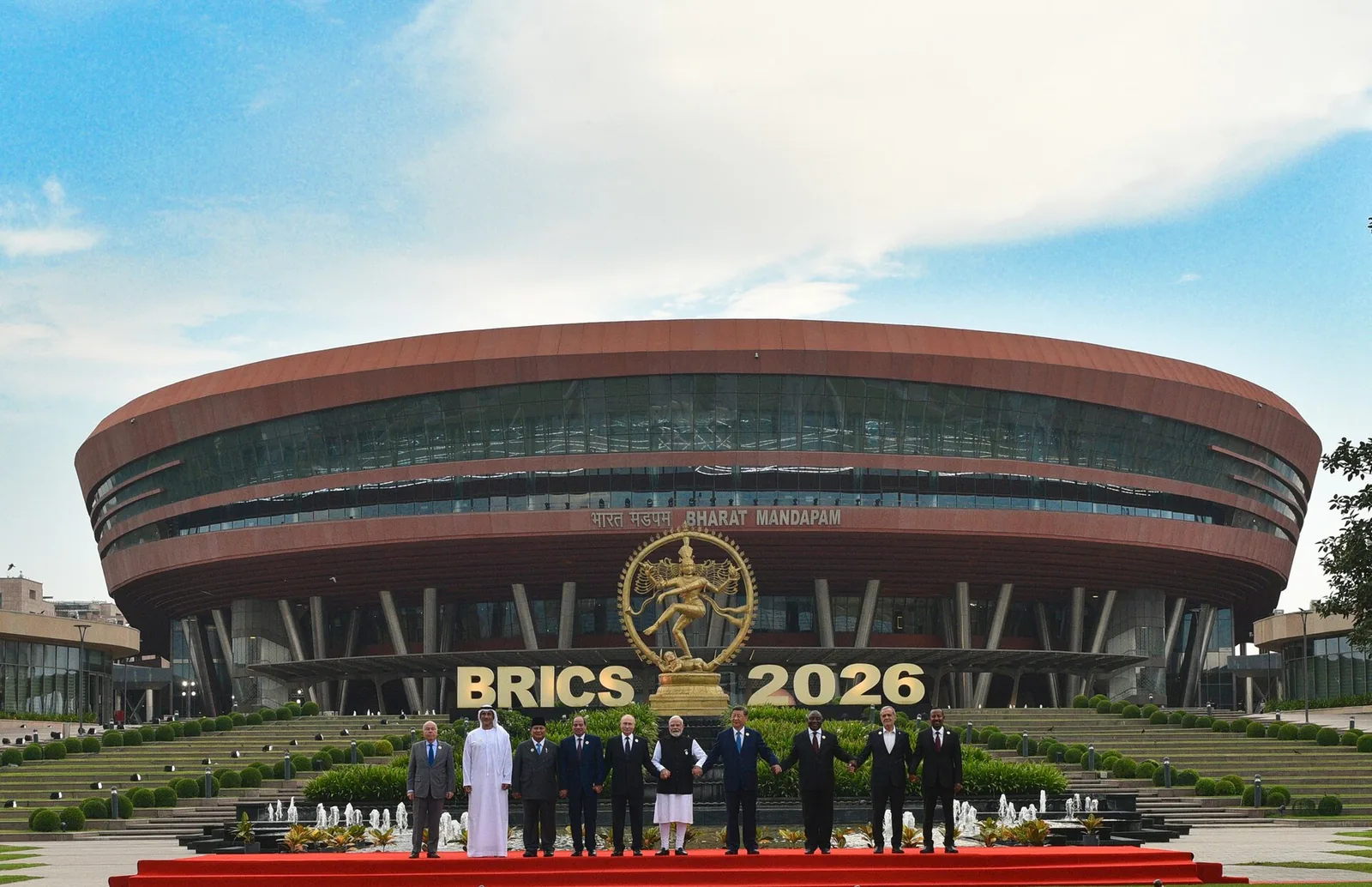
NEW DELHI: The 18th BRICS Summit concluded in New Delhi on September 13, bringing together leaders of the expanded 11-member grouping to discuss global economic, political, technological and security challenges. Hosted by India on September 12 and 13, the summit was held under the theme “Building for Resilience, Innovation, Cooperation and Sustainability.”
The summit brought together leaders including Prime Minister Narendra Modi, Chinese President Xi Jinping, Russian President Vladimir Putin and Iranian President Masoud Pezeshkian. Discussions focused on strengthening cooperation amid rising geopolitical tensions, disruptions in global supply chains, technological changes, climate-related challenges, energy security and the development priorities of emerging economies.
A key outcome of the summit was the adoption of the New Delhi Declaration, which sets out the bloc’s shared positions on global governance, economic development, sustainable growth and international cooperation. The declaration reaffirmed the members commitment to multilateralism, greater representation of emerging markets and developing countries in global decision-making, and cooperation based on mutual respect, sovereign equality and consensus.
Technology and critical minerals emerged as important areas of discussion. Addressing the concluding session, Prime Minister Narendra Modi warned that the “weaponisation of technology and critical minerals” could hinder shared progress. He called for greater inclusivity in technology adoption and stressed that solutions developed within BRICS should also be accessible to countries across the Global South.
India also highlighted a series of initiatives aimed at strengthening resilience and practical cooperation among BRICS nations. These included a BRICS Integrated Early Warning System for the prevention and response to infectious diseases, the BRICS Logistics Supply Chain Cooperation Framework, and the BRICS Incubator Network to connect startups and incubators across member countries. India also proposed a BRICS Startup Innovation Fund to support innovative and scalable solutions.
Other areas of cooperation included digital agriculture, smart grids, energy storage, MSMEs, urban mobility and sustainable development. The declaration also stressed the importance of strengthening resilient and reliable supply chains and promoting wider participation of developing countries in global manufacturing and production networks.
The summit also highlighted BRICS’ growing focus on artificial intelligence and emerging technologies. Chinese President Xi Jinping proposed an open-source artificial intelligence ecosystem for BRICS countries, reflecting the bloc’s broader emphasis on technological cooperation and innovation.
The summit marked the conclusion of India’s 2026 BRICS chairship, during which more than 400 meetings and engagements were held across 30 cities, according to the New Delhi Declaration. The grouping also reaffirmed its support for greater participation of emerging and developing countries in global governance.
At the conclusion of the summit, BRICS leaders extended their full support to China for the 2027 chairship, with China set to host the 19th BRICS Summit. The New Delhi meeting thus concluded India’s year-long chairship with a renewed emphasis on resilience, innovation, sustainable development and cooperation among emerging economies.