
Coronation Park: A History We Refuse to Remember
October 16, 2026
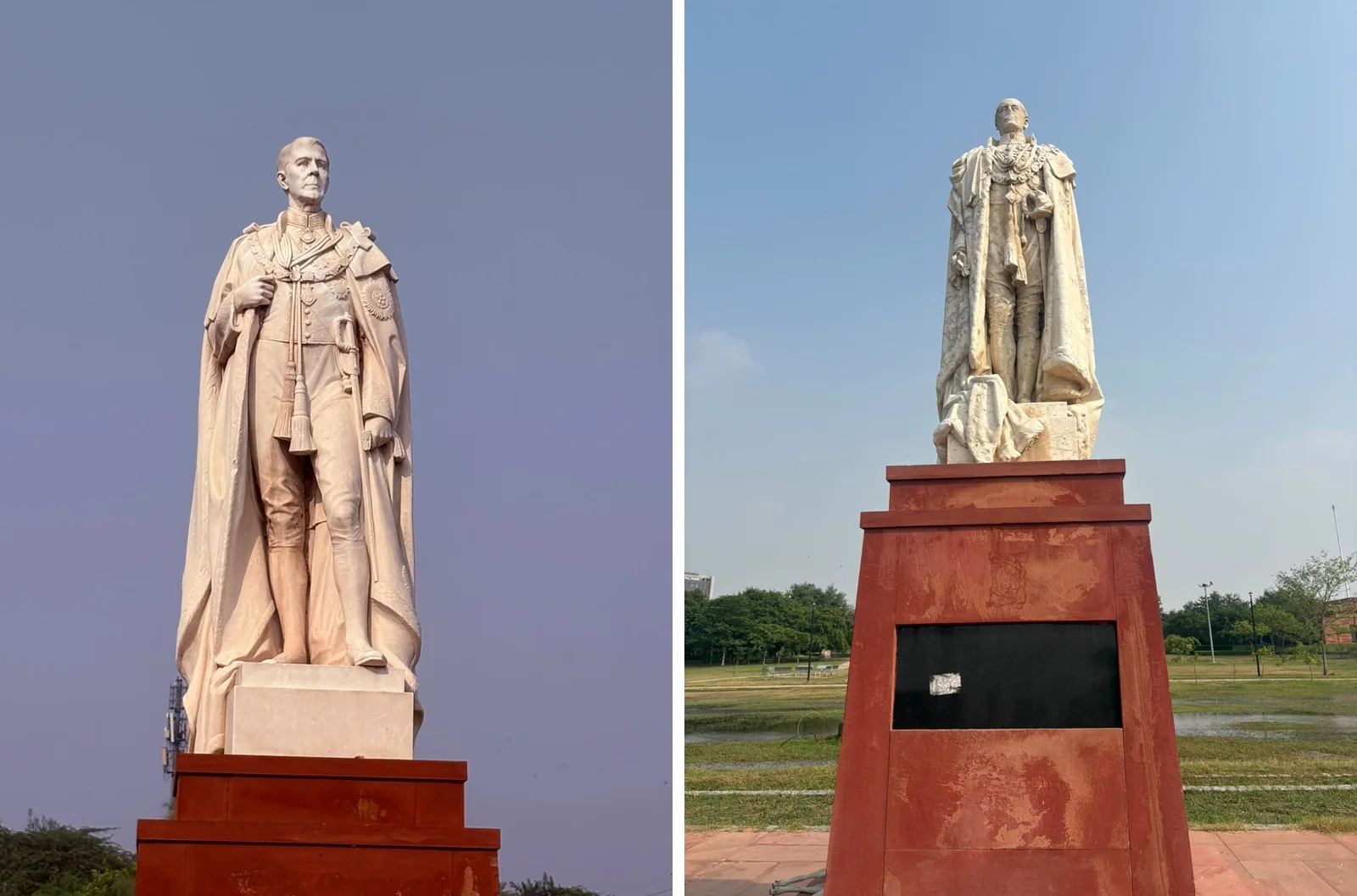
When I decided to visit Coronation Park in Burari, I had expected the place to tell me something about the British Empire; instead, I found myself walking among broken statues and empty nameplates, trying to piece together a history that the place itself seemed reluctant to explain. It made me wonder: what do we do with a history that was imposed upon us? Do we accept it as part of our past, preserve it as a reminder of what we went through, or allow it to fade into the background?
Coronation Park, located on the outskirts of Delhi, seems to answer that question. Once seen as a sprawling landscape deeply tied to the Mughal era and early British military history, and later as a place associated with Delhi Durbars and imperial ceremonies. The place gets its name from the three Delhi Durbars held in 1877, 1903, and 1911, marking the proclamations of Queen Victoria as Empress of India and the accessions of Kings Edward VII and George V. The statue of George V stands among those of the viceroys who once governed India under British colonial rule. These statues were relocated from their original site in the 1960s to store the monument out of public sight and remove visible reminders of the British Raj.
My first impression of the place was that of a burial ground for old colonial statues, except there were no names, no dates, no lines of explanation. A visitor who did not already know who these men were might leave without ever finding out. And I grappled with the question of whether that’s acceptable for a place that boasts history but refuses to talk about it. Seventy-nine years after independence, we have neither made peace with the British Raj or the Colonial rule nor finished explaining it. We rename, we replace, we relocate. The story of Coronation Park after independence is a tale of this twin identity where it appears like we are brave enough to forget the past but not brave enough to let it go.
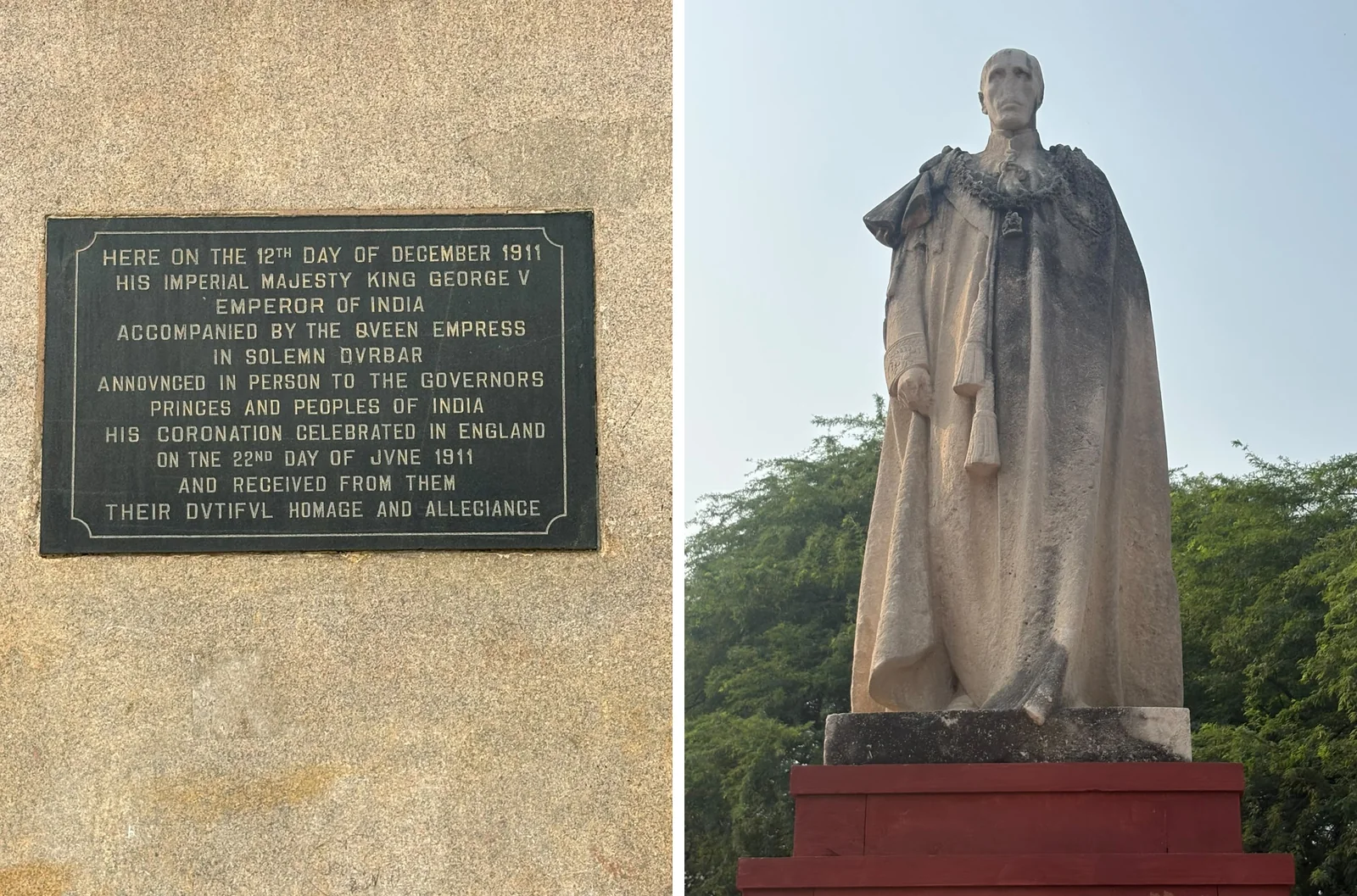
The statues have not been cleaned in a long time. But to be fair, the park was tidy when I visited. The paths were swept, there was little litter, and the only real nuisance was the water puddles here and there. Someone maintains the lawns. Nobody, it seems, is maintaining history. And if the state has not decided what Coronation Park means, the public has.
It is a leisure park now. On the evening I visited, young adults had the lawns to themselves, walking in groups, chatting, talking about life and work with the king looming behind them. Children ran between the rides and swings, entirely uninterested in the history of the land that was now a football pitch for them. And it occurred to me that there was something healthy in that. A field once built to display imperial power is now a place where ordinary Delhi families spend a free evening. A place that became host to the might of the British Empire in 1877 while The Great Famine of 1876–1878 ravaged parts of India is now nothing but a selfie point and a park you visit to take a walk and rest. Lord Chelmsford, viceroy during the Jallianwala Bagh massacre, and Lord Irwin, whose government jailed Mahatma Gandhi during the Salt Satyagraha, have become a backdrop for selfies.
When George V came down from India Gate in 1968, he was not destroyed. Whether that reveals the beauty of the Indian mindset, one that resists the act of destruction is another argument. But it certainly doesn’t appear to be a colonial hangover.A hangover is not simply the presence of a past that was forced upon you. It lies in how that past continues to live in the present. And that’s not what I see at Coronation Park. On the contrary, the statues suggest that we are uncomfortable enough with these men to banish them to a corner of the city, leave them unattended, and offer visitors no explanation of who they were or what they represented.
A country truly over its colonial hangover would not need to hide these statues. And when you look at it, the fix is not expensive. I’m sure they could just as easily clean the statues as they clean the ground. The setting up of an interpretation centre to help the visitors learn about the history and significance of the site, as suggested by INTACH, might not be tough either. But do you tell them the uncomfortable truth while polishing their statues and remind them of the hardships that India faced during colonial rule, or do you let them stand unattended and unexplained in the corner of the city as they perish, and with them the memories of their actions? At that moment, I felt comfortable with the idea that Coronation Park was indeed just a park and, as such, it served its purpose.