ECINet: The Software at the Centre of India’s Electoral Roll Debate
October 8, 2026
India's Election Commission (ECI) finds itself at the wrong end of mounting criticism over its functioning and credibility. At the centre of the controversy is Chief Election Commissioner Gyanesh Kumar. But amid the larger controversy, it is the Election Commission's new software, ECINet, that has raised another set of serious questions. Launched as a platform to unify the Commission's various electoral services, ECINet is being questioned over how much control it gives to the central system and how much decision-making remains with on-ground officials.
ECINet was launched in January this year after a beta testing during the Bihar elections in November 2025. During the Special Intensive Revision, or SIR, electors were asked to submit forms and documents through the platform. These were later verified by officials. The concern is particularly serious when you look at what happened in Goa. Electoral rolls are not simply databases, they determine who gets to exercise their right to vote and often government benefits. During the Special Intensive Revision, some voters in Goa were flagged by the system because of what the Election Commission calls “logical discrepancies”. These could include mismatches in names, ages or links with a parent or relative in an older electoral roll. In some cases, these could simply be the result of human errors.
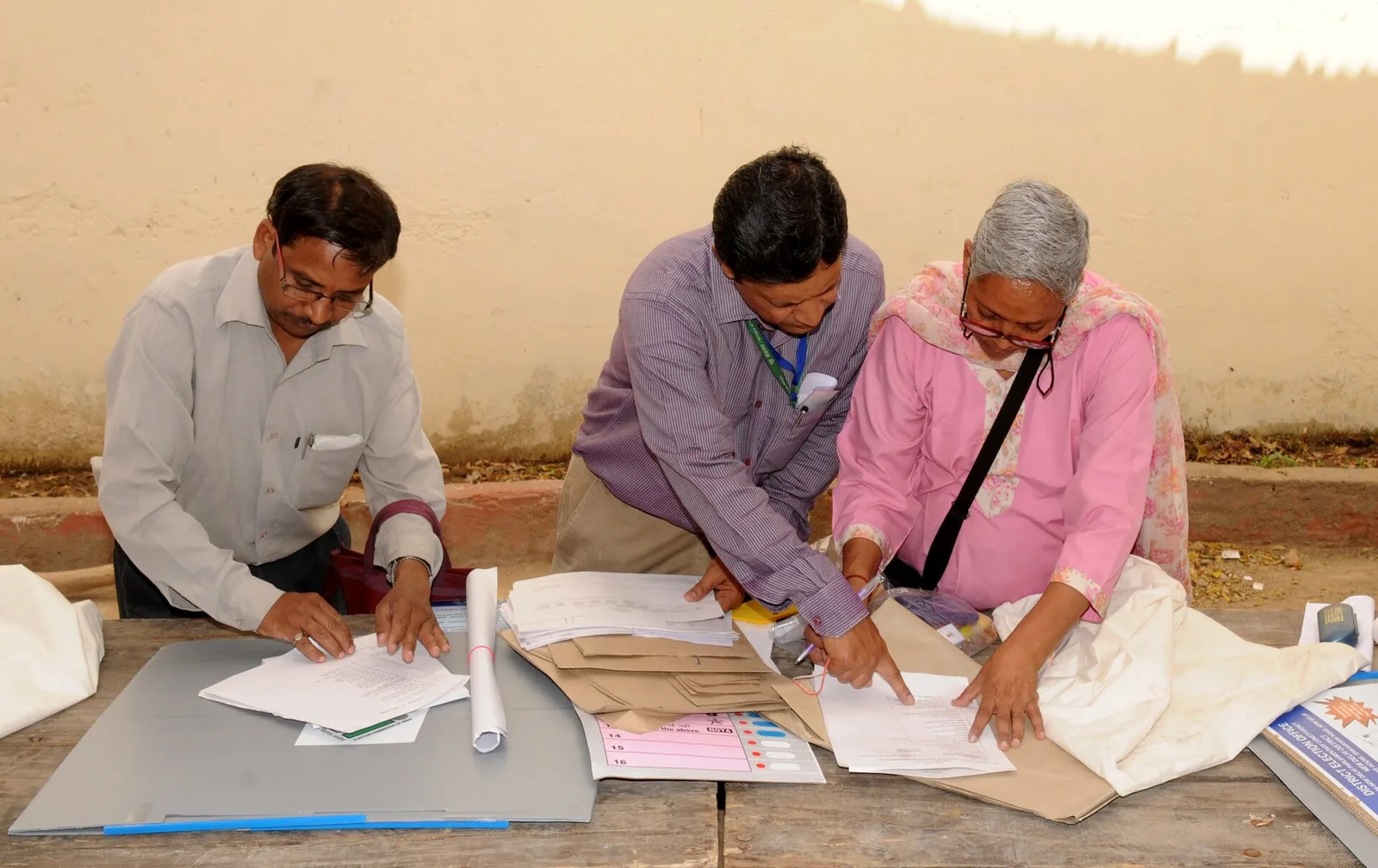
The Supreme Court had directed that such voters be given an opportunity to submit documents and be heard before the final electoral roll was published. Goa's Electoral Registration Officers subsequently examined the cases of 97 voters and, after hearing their cases and examining their documents, found them eligible to be included in the electoral roll.
However, when the EROs tried to add their names back, the ECINet software did not allow them to reverse the earlier deletions. Simply put, the officials who had examined the cases and found the voters eligible were unable to restore their names because the software did not provide them with the necessary functionality. It simply refused to override the earlier deletion.
When the final electoral roll was published on February 21, all 97 names were still missing.
This raises a much bigger question: If an Electoral Registration Officer has the legal authority to decide whether a person should be on the electoral roll, why does his/her inability to execute this decision lies in the hands of the centre. The issue becomes even more serious in Goa because being left out of the electoral roll has more consequences than just not being able to vote. Several state schemes use electoral-roll status to establish eligibility. According to The Indian Express report, the Goa Mediclaim Scheme, which funds super-speciality treatment not available in government hospitals, is open only to voters of the state and those registered on the ECINet software.
This is important because under the Representation of the People Act, 1950 and the Registration of Electors Rules, 1960, the Electoral Registration Officer or the ERO is the statutory authority responsible for preparing and revising the electoral roll.
The whole incident has also attracted strong political criticism. Congress MP Shashi Tharoor, reacting to the Goa case, called the matter “extremely serious”. He further added that the software aided in depriving citizens of constitutional rights as well as access to essential humanitarian benefits. He called on the Election Commission to apologise to the affected citizens and demanded that ECINet software be taken back.
But the controversy around ECINet is not limited to the 97 voters in Goa. The Maharashtra Chief Electoral Officer has also sought changes to the software. He emphasized the role of ground-officials in conducting fair elections and requested functionality options to make such changes available to the EROs. The request involved four changes aimed at ensuring that EROs can exercise their statutory powers through the ECINet software.
Maharashtra's CEO also sought the option to exempt certain voters from a personal hearing. He argued that for senior citizens, persons with disabilities and other vulnerable voters, where satisfactory documents had already been submitted, there’s no urgent need for a personal hearing. But this option is not available on the software. He also asked for an “Other/Other Equivalent Document” option. The concern was that the prescribed list of documents is not an exhaustive list, some people, including members of particularly vulnerable or marginalized communities, may not possess documents from the specified list.
Election Commissioner Sukhbir Singh Sandhu had also raised concerns about this centralisation. According to The Indian Express report, Sandhu questioned why the responsibility for electoral rolls remained with CEOs, DEOs and EROs while access and control over the software remained centralised with the IT division.
Election Commissioner Vivek Joshi had also expressed concerns over the system, with both commissioners calling for greater examination of the software and its centralised functioning.
A centralised system can make the management of electoral rolls faster. It can also make it more standardised and easier to monitor. As is the use case of technology, it can bring multiple platforms under one system and reduce duplication. But the same centralisation can become a problem and means of exclusion when options to prove one’s identity does not exist in the software. A centralised system escapes so many checks at different stages and concentrates control in the hands of a few.
The Goa case is an example of exactly that problem. The EROs had examined the voters, heard their cases and decided that they were eligible. But the technical system did not allow those decisions to be implemented in time.
These concerns are currently being reviewed by the ECI, which announced a committee including an independent IIT/IIIT expert to examine ECINet's compliance with electoral laws and rules.
The Commission has also already made changes to the SIR process following concerns raised by Maharashtra. It said voters facing “logical discrepancies” would not necessarily have to appear personally at an ERO or AERO office. Booth Level Officers would instead collect documents from their homes and upload them on ECINet for a decision by the ERO. There’s small room for personal hearings but to be held only during exceptional circumstances, preferably online.
The ECI has also said that people whose names are left out during or after SIR can apply for inclusion through continuous updation. In Goa, the Commission said the Chief Electoral Officer had directed BLOs to conduct house-to-house visits to voters left out of the roll, and that 81 of the 97 affected voters had subsequently filed Form 6 applications for inclusion.
A centralised system can make electoral management more efficient. But when the system encounters an unusual case, there needs to be enough flexibility for the officer legally responsible for the electoral roll to examine that case and act on it.
There’s no doubt that the software can help make the electoral process more efficient, but there’s a need for enough room for the ground-official to make decisions when the software faces an unusual case. Because when a voter is deleted from a list, correcting that mistake shouldn’t be left out to the software alone which already lacks several options. This decision should be left to the officials who have historically maintained the electoral rolls.